How The Veterinary Intelligence Company briefed 1,000+ conference meetings using Keiki
The Veterinary Intelligence Company gave Vet Together vendors an iMessage agent: scan a QR code, get a brief before every meeting. A third of vendors signed up.

Short answer: The Veterinary Intelligence Company (Vet Intel) provides the veterinary industry with go-to-market intelligence, and at the Vet Together conference it gave vendors a Keiki agent they reached by scanning a QR code, which texted a brief on each clinic, answered event questions and took voice notes after meetings. About a third of the show's vendors signed up, three times the plan, and briefs for more than 1,000 scheduled meetings were delivered by text or viewed online.
At Vet Together, vendors don't wander a show floor. They run dozens of 15-minute meetings with veterinary practices, back to back, with a few minutes to walk between them. The Veterinary Intelligence Company (Vet Intel) had the data to prepare every one of those meetings. The hard part was getting it to a rep in the two minutes before they walked in. So Vet Intel put an agent on Keiki that reps reached by scanning a QR code: no app, no login, just an iMessage thread that briefed them on each clinic. It planned for 15 vendors. 49 signed up, more than three times the plan and about a third of the show.
- scheduled meetings briefed by text or online
- 1,000+
- more vendors than planned: 49 vs. 15
- 3×
- meeting notes recorded
- 170+
- messages between reps and the agent
- 2,700+
The company
The Veterinary Intelligence Company provides the veterinary industry with go-to-market intelligence. Its customers are the businesses that sell to, buy or operate veterinary clinics: diagnostics, nutrition, clinic groups and the technology vendors around them. Vet Intel tracks clinics and gives those companies' go-to-market teams the data behind territory planning, CRM cleanup, strategy and, increasingly, the AI tools they work with.
The market has changed fast. Selling to vets used to be relationship-driven: one rep knew one clinic for years, and a practice dealt with a handful of vendors. Now AI has made new products cheap to build, and a vet who once had five or 10 vendor relationships can have dozens, all competing for attention over email and social. Bad CRM data makes the noise worse, and reps lose hours researching each clinic by hand.
So one question matters more than most: I'm about to speak to this clinic. What do I need to know, what's my opportunity, and are they using a competitor? Vet Intel's answer is the meeting brief.
The event
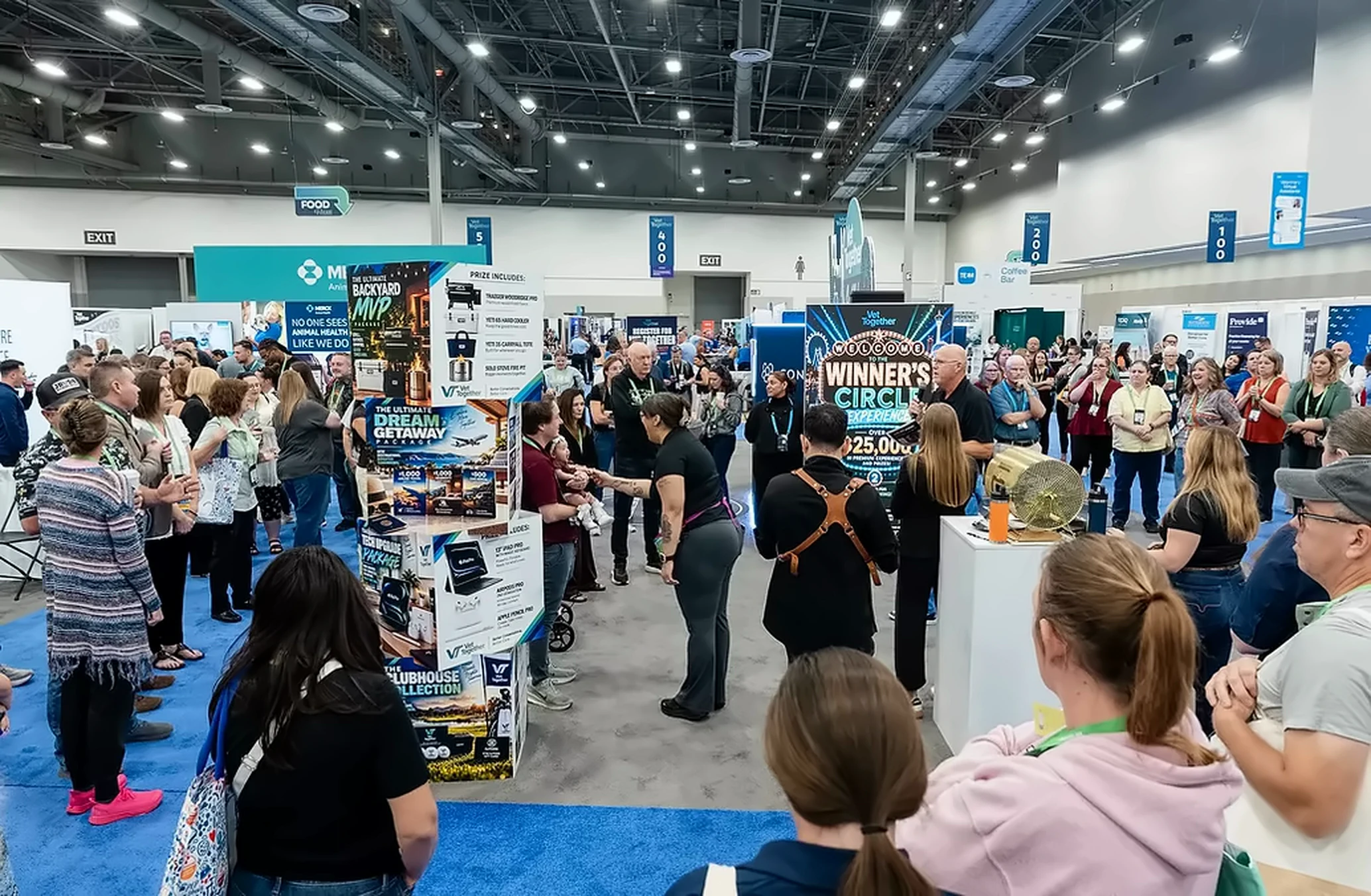
Vet Together matches practices with vendors ahead of time, based on what each practice says it wants, and runs the show as scheduled one-on-one meetings. For a vendor, that means 30, sometimes 90, conversations in a few days, 15 minutes each. There's no time to wing it.
Reps were already spending hours before events like this, piecing practices together from Google and ChatGPT. Vet Intel offered to do that work for them: a short dossier on every practice a vendor was meeting, built from its data.
It had web pages for preparing beforehand. For the event itself, it wanted more than a one-way scheduled message. It wanted reps to be able to chat with their briefs: share their goals, ask for opening questions, work out how to pitch. An agent that went with them through the whole event. That's where Keiki came in.
No app, no login: a QR code that opens a text thread
Vendors joined by scanning a QR code at Vet Intel's table. It opened an iMessage thread with the agent, and from then on the agent came to them: a brief before each meeting, with the next one already lined up.

Morning Dana ☀️ You have 11 meetings today. First up, 9:00: Riverside Animal Hospital.
Independent, 4 vets, meeting the practice manager. They flagged diagnostics as a priority and run a competitor’s in-house lab today.
good opener?
Ask how lab turnaround has held up since they added a fourth vet. It lets you talk about capacity, not price.
perfect

The QR code mattered more than anyone expected. Event-specific apps can be hard for attendees to navigate, and they usually mean another download and another login. The QR code onboarding was smooth: at Vet Intel's table, vendors kept saying how easy it was, and how glad they were not to install anything. Many had assumed meeting intelligence would be expensive and hard to use. This was the opposite.
That's the point Adam Little at Vet Intel keeps coming back to. People in tech will put up with apps, logins and two-factor codes. Most people won't, and that friction caps the value of whatever sits behind it, including Vet Intel's data. Texting removed it. The friction was zero, and the ceiling was high: reps could give the agent context and push it further. If joining had meant downloading an app and creating a login, Adam thinks people wouldn't have used it at all.
Adding voice notes and event info mid-conference
Texting the agent felt like texting a friend who was trying to help, so reps got comfortable fast and started asking it things it was never set up to answer, like questions about the event itself.
Because it was an agent, Vet Intel could keep up. About a day in, it added the schedule, locations and general event information. Then it saw reps leaving the agent notes and asking for reminders, so it added voice memos: a rep could record a one-minute note walking out of a meeting, and the agent filed it with that practice and pulled out the next steps.
Saved to Riverside Animal Hospital. Next steps: send panel pricing to the practice manager by Friday, and loop in their lead vet. Want a reminder?
yes thursday am. also where’s lunch
Reminder set for Thursday at 9:00. Lunch is in Hall B until 1:30, and your next meeting is at 12:45, so you have time.
Over the show, Vet Intel also added reminders, morning recaps, note sharing and a better signup flow. Reps recorded more than 170 meeting notes, some of them dozens each, and some kept using the agent after the event.
Yesterday: 12 meetings, 9 voice notes. 3 follow-ups are due this week, starting with Riverside’s pricing on Friday. Today you have 10 meetings, first one at 8:30.
share yesterday’s notes with my manager
Done. I sent them to Sam as one summary, with each practice and its next step.
you’re the best
That changed what the product was. The brief got reps into the meeting; what they really wanted was help with everything after it. And the notes gave Vet Intel something it never had before: a view of what actually came out of the conference. A traditional event app wouldn't have surfaced any of that. The text thread did, because people used it however they wanted.
What surprised people most was watching it happen.
"It's really powerful to go back to a person and say: that thing you tried to do a moment ago that I couldn't do? Now it's like Neo in The Matrix. 'I know kung fu.' People do not expect things to get better at all, let alone in that time period, let alone for the exact thing they tried to do a moment ago. From a business perspective, it just puts you in a different camp. You come across as a company that is actually investing in and supporting its users, because they're seeing the product get better so much more quickly for the thing they specifically needed."
Adam Little, The Veterinary Intelligence Company
Before and after Keiki
Why not build it in-house
Keiki built and shipped the agent in a few weeks, against the conference date. For Vet Intel, doing it alone was never a real option.
"Point blank: without you guys, it doesn't get built. It would take a lot of time, but the urgency and the opportunity are such that there's no shape of our team to be able to do this really well. It would have been a massive distraction, taking our really limited engineering resources, who are focused on the data side, to build out a system that may or may not work. The other thing is that you just end up building it wrong. There are all these components that go into making one of these things work. Being able to focus on the part of the experience we're good at, and have the infrastructure work around us, is really critical."
Adam Little, The Veterinary Intelligence Company
It also had to be right on day one. Each company could only view its own briefs (how Keiki ties a conversation to a person). And people have had enough bad AI assistants that refuse or don't help; this one carried Vet Intel's name.
Then the engagement went from "I hope anybody uses it" to "can we keep up?" Vet Intel ran a mission control during the show, watching messages come in so it could flag issues, while Keiki shipped new features and fixes alongside it. Adam says that support mattered as much to the relationship as the build itself.
Why it worked
- It met people where they already were. A QR code and a text thread replaced the app and login everyone expected. Most of the 49 vendors signed up at the event, after seeing how simple it was or hearing about it from other vendors.
- It felt human, so people pushed it. Reps asked it anything, and their questions showed Vet Intel what to build next.
- It got better while people watched. New features landed during the show, and people's expectations of Vet Intel went up with them.
- The event made the data urgent. With 30 to 90 meetings in a few days, a good brief at the right moment was the difference between walking in prepared and walking in blind.
- Everyone in the room benefited. A prepared rep doesn't waste a practice's 15 minutes, and the practices could tell who had done their homework.
- It was safe to put in front of customers. Each company saw only its own briefs, and support was there when usage outgrew the plan.
The impact
Briefs for more than 1,000 scheduled meetings were delivered by text or viewed online, across the iMessage agent and Vet Intel's web pages. Using general assumptions about prep time per meeting, Vet Intel estimates approximately 175 hours of potential research time saved.
- 58 reps used the agent actively, some more than 10 times, and reps and the agent exchanged more than 2,700 messages.
- 49 vendors signed up, more than three times the 15 planned, and about a third of the show.
- Reps recorded more than 170 meeting notes, and kept using the agent after the event.
The results went past the show. Vet Together laid the groundwork for an expanded relationship in 2027, and it showed Vet Intel's existing data in a new light, not just its new product. It also gave Vet Intel a story to tell when it launches the next dataset.
It also fit what Vet Together is for. The conference exists to bring people together for conversations that matter, and the agent didn't take anything away from that.
"You can use AI to actually create more human experiences. It's not about reducing that or eliminating the humanity. We're getting to what matters to you more quickly."
Adam Little, The Veterinary Intelligence Company
What's next
Vet Intel is running the agent at its next conference, and at others after that. The bigger change is in how it delivers its intelligence.
Until now, Vet Intel has sold top-down, to larger companies. But data is only as valuable as its ability to reach a rep when they need it, and a top-down rollout puts a lot of layers between the purchase and the rep walking into a clinic. Vet Together showed the other way: a personal assistant for every person who sells to clinics, shaped to their own context and tools, rather than one more platform their company bought. Give people that, and new uses show up fast: meeting notes, follow-ups, their own information mixed in with Vet Intel's. It also lets people adopt it at their own pace.
"You can have five people within a company where one has never used ChatGPT and another is 3D printing something at home. If you try to create the same experience for all of them, you'll probably fail at all of them. Now an early adopter can take it really far, and the reluctant person just gets curious."
Adam Little, The Veterinary Intelligence Company
Vet Intel is also preparing a new workforce dataset, the people behind each practice, which powered part of the Vet Together briefs. The plan for launching it uses the same agent, with a simple call to action: "click here, we'll brief you on your first meeting."
FAQ
Can conference attendees use an AI agent without downloading an app? Yes. At Vet Together, vendors scanned a QR code at Vet Intel's table, which opened an iMessage thread with the agent. There was no app to install and no login, and from then on the agent texted them a brief before each meeting.
What did the agent do for reps at the event? It texted a brief on each veterinary practice before the meeting, answered questions about the schedule and venue, and took voice notes after each meeting, filing them with that practice and pulling out next steps. It also sent reminders and morning recaps.
How long did it take to build? Keiki built and shipped the agent in a few weeks, against the conference date, and kept adding features during the show, including voice memos, event information, reminders and note sharing.
How were briefs kept private between vendors? Each company could only view the briefs written for it.
What were the results? About a third of the show's vendors signed up, three times the plan, and briefs for more than 1,000 scheduled meetings were delivered by text or viewed online. 58 reps used the agent actively, and Vet Intel estimates approximately 175 hours of potential research time saved.
Put your data where your users already are
If your product's value depends on reaching someone at the right moment, put it in the thread they already have open. Connect your data, give your agent a line, and let people start with a single text.
Start building on Keiki or read Building iMessage Agents: The Complete Guide.